If you grew up in an Italian-American family, you probably know pizzelle: the round, patterned waffle cookies that show up at weddings, holidays and Sunday dinners. What many people don't know is that in Abruzzo, the region where they were born, many families call them by another name. In L'Aquila, where Dolci Aveja is made, they are ferratelle.
Same tradition, two names. Here is the story behind them, and what makes the Abruzzo original worth tasting.
Same cookie family, different names
The word pizzelle comes from the Italian pizza, meaning round and flat. It is the name that traveled with Italian immigrants to the United States, and the one most Americans know today.
In Abruzzo, the name changes from town to town. In L'Aquila and much of the inland area they are called ferratelle, from ferro, the Italian word for iron. In other villages you may hear neole, cancelle or nevole. Ask three grandmothers from Abruzzo and you may get three different answers, all of them correct.
Where ferratelle come from
Ferratelle are one of the oldest sweet traditions of Abruzzo, a mountainous region in central Italy known for simple, honest food. They were made for the moments that mattered: weddings, baptisms, Easter and village feasts.
The recipe has always been short: flour, eggs, sugar and a little fat. What made each batch special was never a secret ingredient. It was the hands, and the iron, that made them.

The iron that gives them their name
Traditionally, ferratelle were baked one or two at a time in a heavy iron press with long handles, held over an open flame. In Abruzzo, the plates were not engraved with just any pattern: they carried the initial of the family name.
For two or three centuries, the iron was part of a bride's trousseau. When a young woman married, she received her own ferro, engraved with her family's initial, and every ferratella she baked carried that mark. Many Italian-American families still keep their nonna's iron, even if it now lives in a drawer.

In Abruzzo, every family had an iron. The initial on the cookie told you which family it came from.
One Ave Maria, one ferratella
At Dolci Aveja, this story is personal. Nonna Anaide, who founded Dolci Aveja, never used a timer. Like every Italian cook, she measured by eye and by heart. With her rosary in hand, she placed the dough in the iron, prayed one Ave Maria, and opened it: one prayer for every one or two ferratelle, about a minute each.

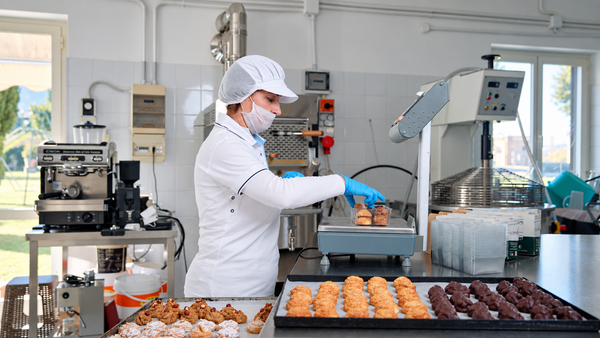
Still made 100% by hand
Ferratelle are the only Dolci Aveja specialty still made entirely by hand. Each piece of dough is rolled and cut by hand, placed one by one in the iron, baked for about a minute, then lifted out one at a time and left to cool. No two are exactly alike. Every ferratella is perfectly imperfect, and that is what makes them beautiful. Even today, we are proud to keep this tradition alive.

Hear the story from Maria Teresa herself. Watch her tell the story of Nonna Anaide and the ferratelle iron, in Italian with English subtitles, on our Instagram.
Ferratelle vs. pizzelle: what's the difference?
The honest answer: they belong to the same family. The differences come from regions, families and how each one is made.

| Feature | Dolci Aveja Ferratelle | Typical U.S. pizzelle |
|---|---|---|
| Name used in | L'Aquila and inland Abruzzo | Most of Italy and the U.S. |
| Meaning | From ferro, iron | From pizza, round and flat |
| Texture | Thicker, crisp and rustic | Usually thin and crisp, sometimes softer |
| Flavor | Simple and lightly sweet, with a touch of vanilla and no anise | Often anise or vanilla, sometimes chocolate |
| How they're made | Made 100% by hand, one by one in an iron press | Usually an electric pizzelle maker |
That last point is what most people notice at first bite. The Dolci Aveja ferratelle are thicker than the thin pizzelle many Americans know, with a satisfying crunch and a clean, simple flavor that lets the real ingredients speak.
How Italians enjoy them
Ferratelle are simple on purpose, which makes them easy to love at any time of day:

Bringing L'Aquila to your table
At Dolci Aveja, ferratelle are still made in L'Aquila by the founding family's bakery, following the same tradition since 1977. Dolci Aveja US brings them across the ocean and ships them across the United States, so you can enjoy a real taste of Abruzzo at home, whether you call them ferratelle, pizzelle or simply "the cookies nonna used to make."
Try the Dolci Aveja Ferratelle, explore our authentic Italian cookies or browse our Italian cookie gift boxes.

Dolci Aveja · L'Aquila 1977
Ferratelle Italian Handmade Waffle
The most traditional dessert of the Abruzzo region, handmade and cooked on cast iron just as it was 100 years ago. No...